


Robots to assist staff in the diagnostic laboratory
Your supplier of automation solutions for diagnostic laboratories
Assistive robots
In modern diagnostic laboratories, the integration of robotics is ushering in a new era of efficiency and precision. Robots that are seamlessly integrated into the laboratory environment play a crucial role in supporting staff and make a significant contribution to improving diagnostic processes. This revolutionary step enables optimised workflows and maximises flexibility in the automation of diagnostic laboratories.

Discover the possibilities of our laboratory robotics
A key feature of these advanced robotic solutions is their vendor-neutrality and the comprehensive range of analytical instruments that can be seamlessly integrated. This flexibility ensures that laboratories can benefit from robotic technology regardless of the origin of their analytical instruments. The robots are capable of performing a wide range of tasks, from pre-analytical work and the operation of analytical instruments to post-analytical work and archiving. The robotic systems can move autonomously within the laboratory, and no structural modifications to the laboratory environment are required.
By connecting to the LIS (Laboratory Information System), the robots become an integral part of the laboratory workflow management system. This enables real-time communication between the various analytical components, thereby increasing efficiency and minimising sources of error. Staff can concentrate on more demanding and interpretative tasks, whilst repetitive and time-consuming work is handled by the robots.
The robots act as precise and reliable assistants, thereby minimising human error and improving the reproducibility of results. Furthermore, the continuous monitoring and analysis carried out by the robotic systems enables the early identification of irregularities or anomalies in the laboratory process, which contributes to enhanced quality assurance.
The wide range of manufacturer-independent analytical instruments supported by the robots enables laboratories to diversify their analytical methods and adapt flexibly to changing requirements. This strengthens the laboratories’ competitiveness in a constantly evolving medical landscape. The analyses focus on the fields of clinical chemistry, coagulation, haematology and immuno-haematology.
Overall, robots used to assist in diagnostic laboratories represent a turning point in laboratory automation. Integration with the LIS and the manufacturers’ openness towards analytical instruments offer laboratories the opportunity to revolutionise their workflows and take diagnostics to a new level. This innovative technology promises not only increased efficiency, but also greater accuracy and reliability in diagnostic analysis. Furthermore, it can help address issues such as the shortage of skilled staff.
The advantages described open up applications that go beyond laboratories with low throughput. Even in large-scale laboratories, our robot can complement existing analysis lines (Total Laboratory Automation) and support the automation of the associated workflows. Furthermore, its autonomous mobility enables it to be used in intralogistics, for example when transporting samples and materials between different areas of the laboratory. In this way, our robot combines support for analytical processes with the optimisation of internal transport procedures, thereby contributing to a seamless, efficient laboratory workflow.
Our solution can therefore be divided into three main areas
Use cases for AuxQ
Automation in hospital laboratories
Workflow automation in a large-scale laboratory
Intralogistics solutions in hospitals
Precise operation and pre-analytical testing – our laboratory robots make all the difference!
Send us an email:
Automation in hospital laboratories
Pre- and post-analytical procedures in the laboratory
With AuxQ, automation in the laboratory can be flexibly and scalably adapted to customer requirements for lower throughputs of between 50 and 400 samples per hour. The following systems can be combined and configured as required to form the basic components. The result is a system that can be used for everything from providing support during daytime operations to operating independently in the laboratory (for example at night)!
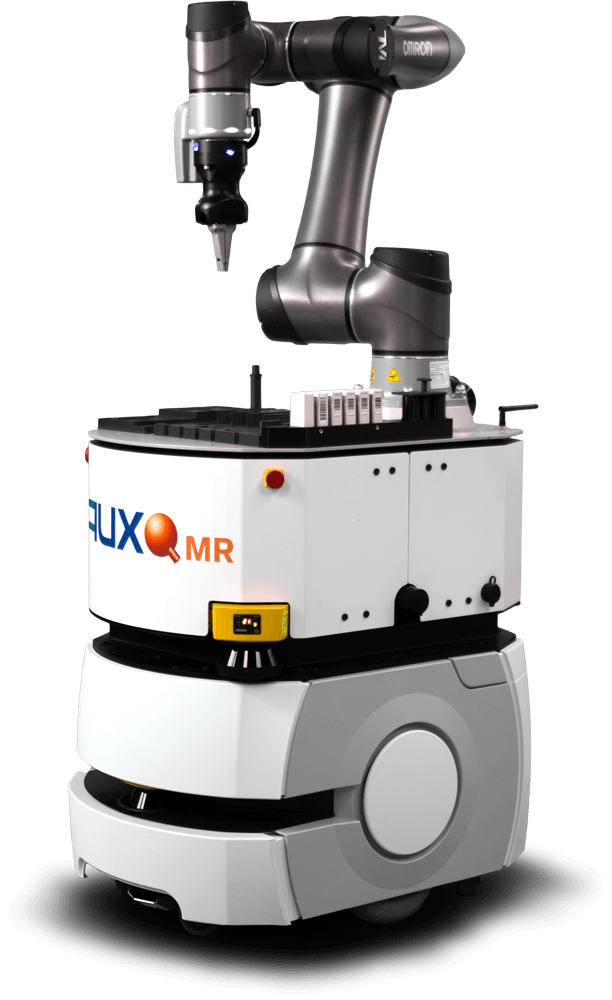
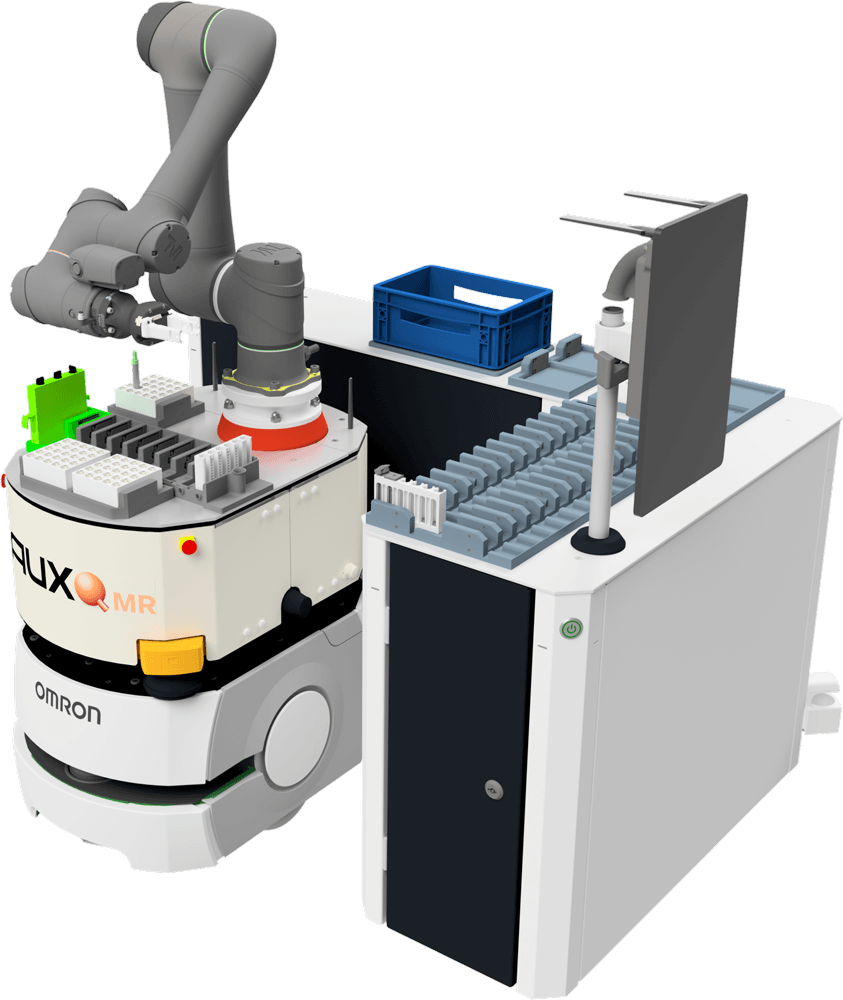
AuxQ MobileLabRobotic (MR)
- AuxQ MobileLabRobotic (MR)
- Large portfolio of analytical instruments, compatible with all manufacturers
- No structural modifications to the laboratory environment required
- Support and self-sufficiency during day and night operations
- Mixed operation with laboratory staff
- Self-navigating system for flexible integration into the laboratory
- Scalable platform for laboratory automation
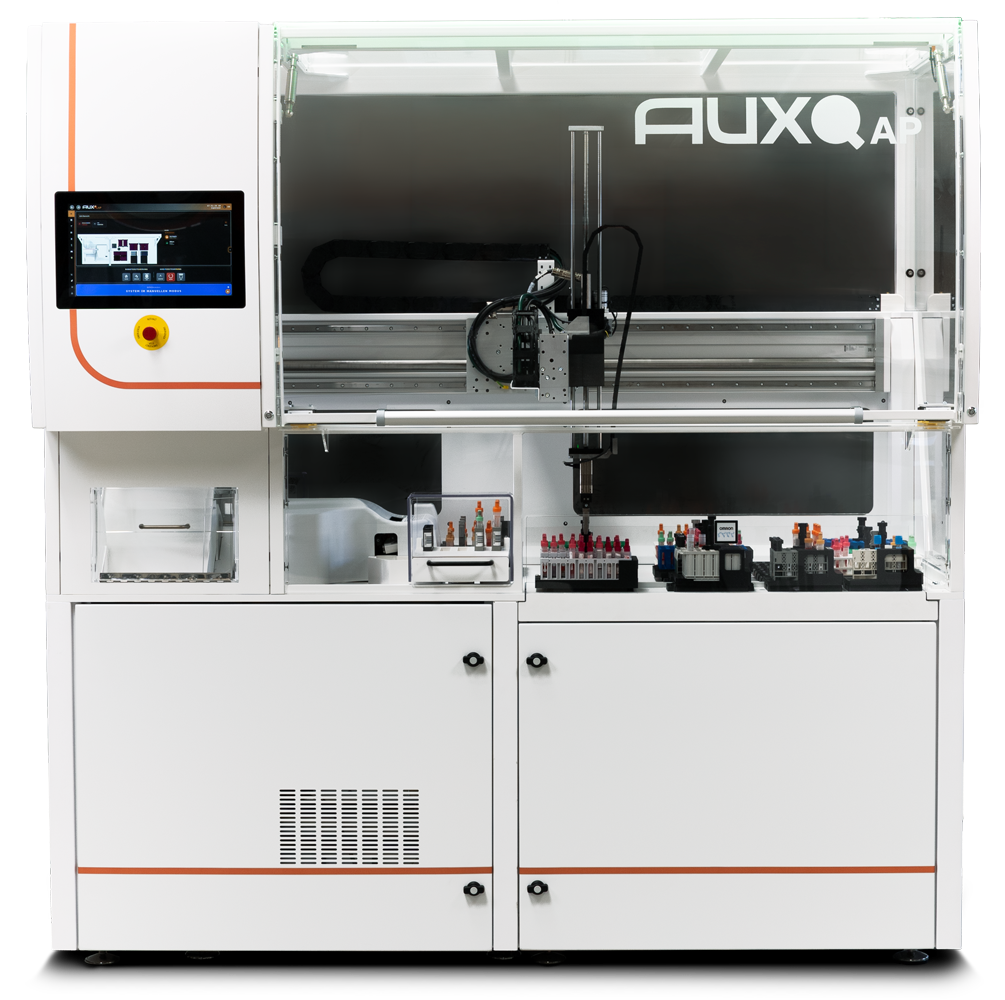
AuxQ AutomatedProcessing (AP)
- Acceptance of samples in bulk, as well as centrifugation, sorting, decapping and level checking
- Autonomous sample processing with the AuxQ MR
- Automated priority sample transfer via drawer and optional pneumatic tube connection
- Throughput of up to 200 to 400 tubes per hour
- Configurable workflows
- Manufacturer-neutral system integration
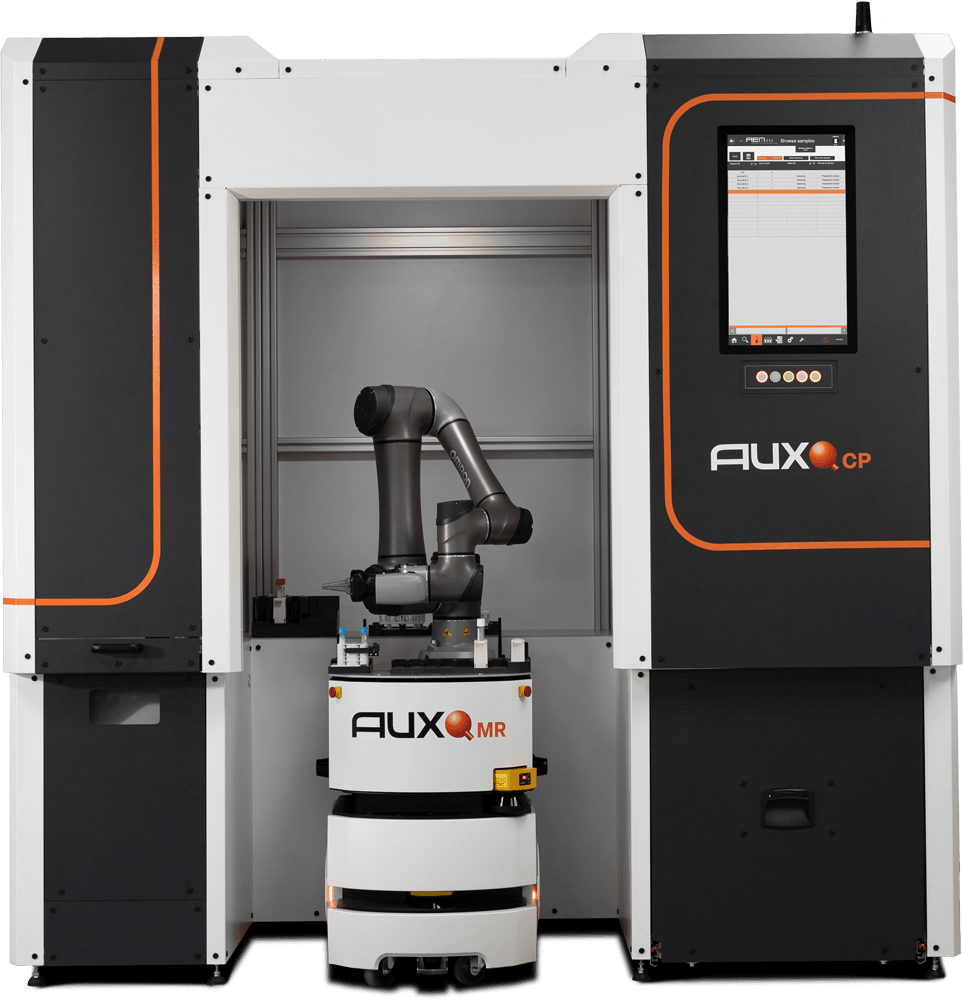
AuxQ CobotProcessing (CP)
- AuxQ CobotProcessing (CP)
- Focus on low throughputs in the laboratory
- Pre- and post-processing of samples for the analysis process
- Identification of barcode, cap colour, tube type and fill level, as well as decapping
- Integration of centrifugation and archiving solutions
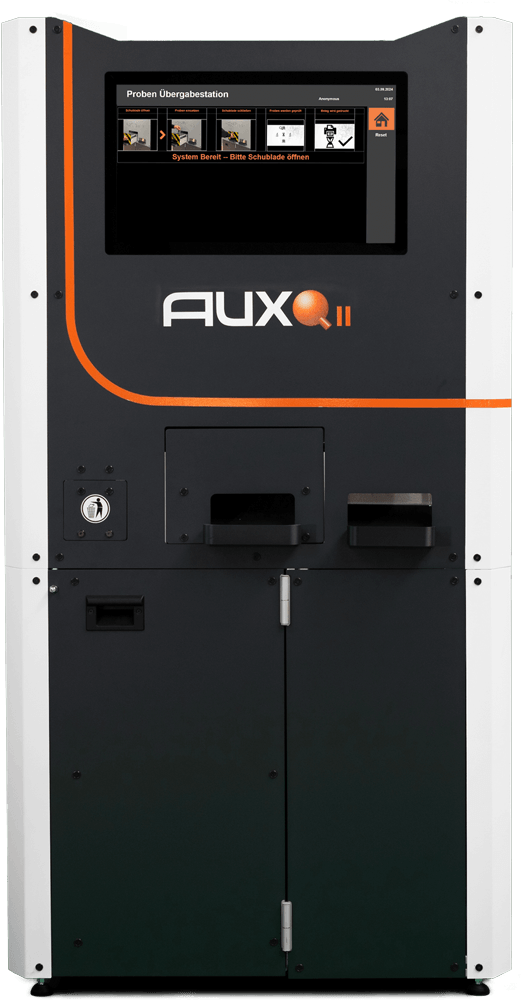
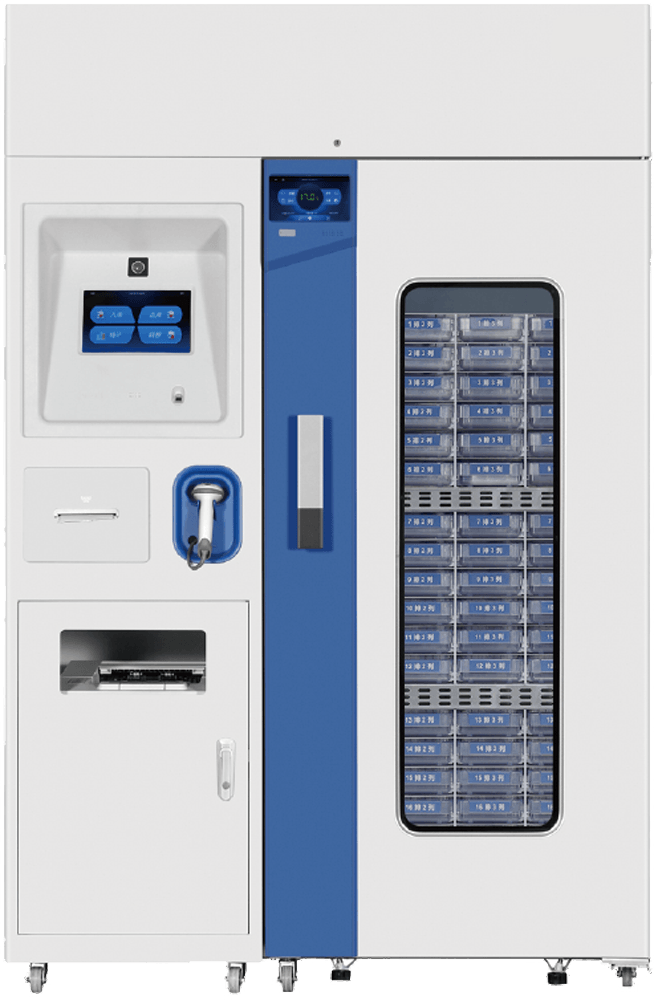
AuxQ IncomingInspection (II)
- Automated analysis of all relevant sample parameters
- Direct or indirect connection to the AuxQ system
- Sample collection from publicly accessible areas
- Optimised for self-sufficient night-time operation
- Drawer for the targeted collection of individual samples
- Receipt printing for complete delivery documentation and documentation of the transfer of liability
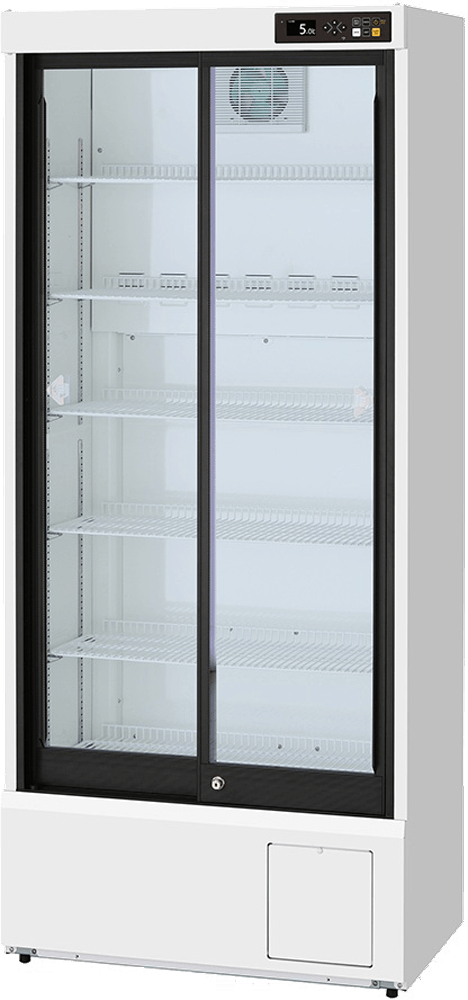
AuxQ ArchivingSolution (AS)
- Configurable archiving solutions for interim and long-term archiving
- Automatic processing of additional claims
- Sample management in the AuxQ system
- Freely configurable sizing
- Refrigerated, non-refrigerated and pharmaceutical configurations available
- Provision of samples, reagents and control samples
AuxQ BloodBankSolution (BBS)
- End-to-end workflow for the automation of immunohaematological processes
- End-to-end workflow for the automation of immunohaematological processes
- Comprehensive solution for integration with the customer’s LIS
- Use of standard analysis systems
- Use of common analysis systems
We’d be here to advise you
Workflow automation in a large-scale laboratory
With the focus on laboratories with higher throughputs, the AuxQ systems offer various ways of supporting staff and reducing their workload. Unlike the aim of fully autonomous night-time operation, the focus shifts to issues such as connecting external analysers or even loading reagents into analysers.
Mobile connectivity for external analysers
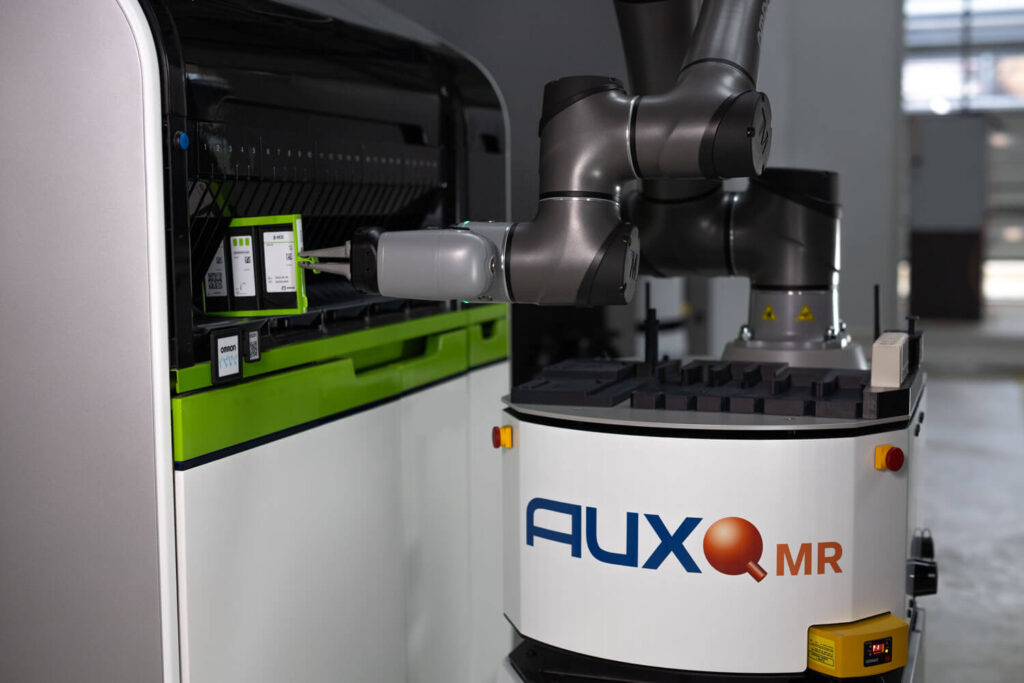
Interaction between the AuxQ MR and analysis lines from various manufacturers. Flexible integration of external analysers using mobile robotics. Focus: low throughputs, multi-stage workflows and flexible layout planning.
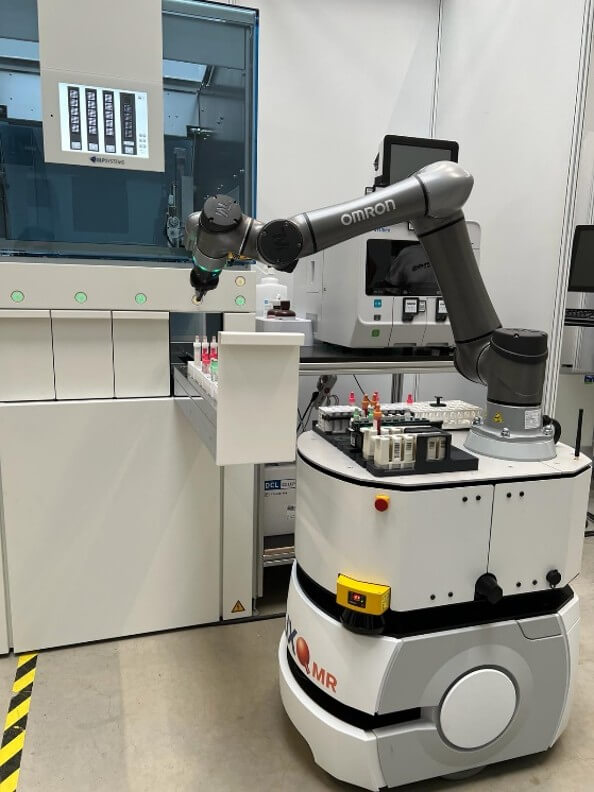
AuxQ MediFlow
A modular system for workflow automation in large-scale laboratories, designed to enable the customisation of sorting, thawing, decapping and other processes. An extension for connecting external analytical instruments.
Reagent loading
Depending on the analytical system, AuxQ can assist with the preparation of the equipment. From loading reagents to loading control samples – it can be flexibly configured.
AuxQ InterfaceCoupling
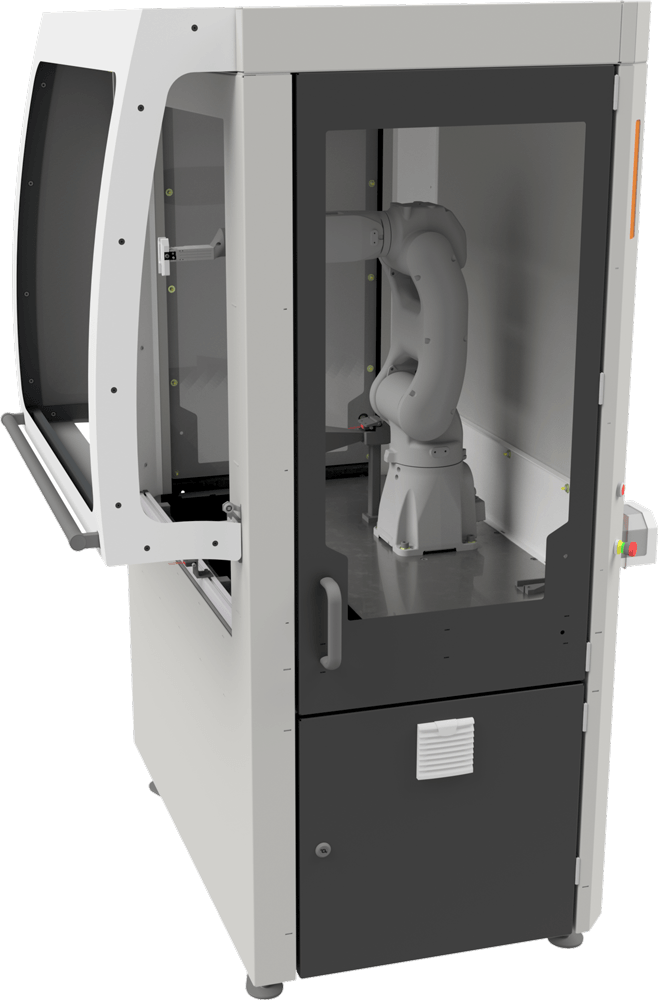
Stationary application designed to integrate with existing analysis lines. Integration of external analysis systems, including automatic rack building. Focus: Rigid interlinking and high throughput.
Send us an email:
Intralogistics and materials handling
Together with the customer, we analyse transport routes and material flows. We provide support right from the initial idea, through concept development, right through to implementation. Our focus is on creating integrated, end-to-end solutions to reduce losses at interfaces.
The solution can be scaled flexibly in terms of transport capacity. Furthermore, it is possible to integrate lifts and electric doors. Order management systems, including dashboard functions, round off the range of features.
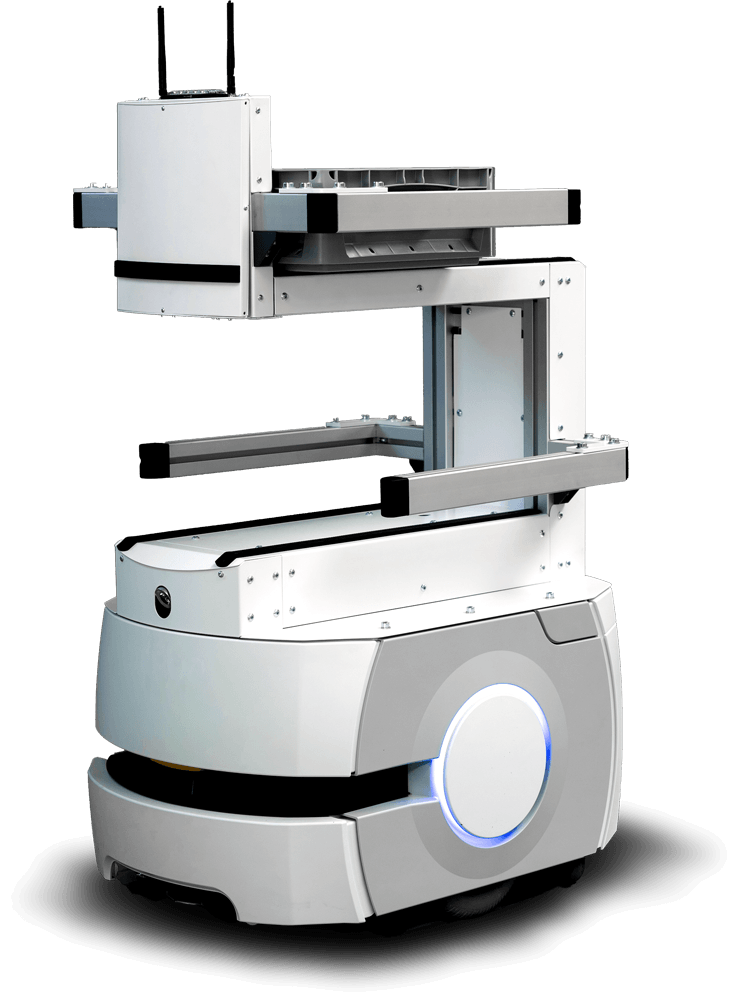
Automatic container handling
A solution for automating transport routes without the need for manual loading and unloading by staff. Can be adapted to the goods being transported and the specific task.
We’d be here to advise you
Robots bring the future within reach!
Your journey with us

Questions and answers about AuxQ
FAQ
Can the laboratory still be used by staff?
Yes, the robot can work side by side with the staff. This means the analysers are not blocked – the equipment can be used in mixed operation.
Will the robot replace all the staff in the laboratory?
Basic tasks such as the processing of samples in the fields of clinical chemistry and immunology, haematology, coagulation and immunohaematology can be carried out by robotic systems. Maintenance and validation tasks remain the responsibility of staff. Paediatric samples must also be assessed on a project-by-project basis.
How long will the laboratory be closed whilst the robotics system is being installed?
Robotics is usually implemented alongside normal laboratory operations. This has only a minor impact on laboratory procedures, which is why there is no need to temporarily close the laboratory.
What happens when there are changes to the laboratory workflow?
The robot configuration can be adjusted at any time, subject to agreement. For example, the tubes used, routing rules, the positions of the analytical equipment in the laboratory or even the analytical instruments themselves can be changed. Adjustments are managed as modular extensions.
The level of self-sufficiency in robotics has changed. How can we respond to this?
Je nach verwendeter Analytik können automatische Kontrollen durch die Robotik durchgeführt werden. Darüber hinaus können Archivierungskapazitäten flexibel erweitert werden.
How does the robot handle automatic additional claims?
AuxQ is usually connected to the local laboratory information system. Samples archived via the system can be automatically reintroduced into the process.
Revolutionary robotics, zero restructuring - Unlimited support, day and night. Strong together in mixed operation!